Tappa 1
Limassol → Latchi
- Distanza
- 71 nm
- Tempo di navigazione
- about 2 h 40 m
- Velocità media
- about 27 kn
Overnight in Latchi
294 nautical miles from Limassol to Rhodes in two days, with a night in Latchi and a stop in Kastellorizo.
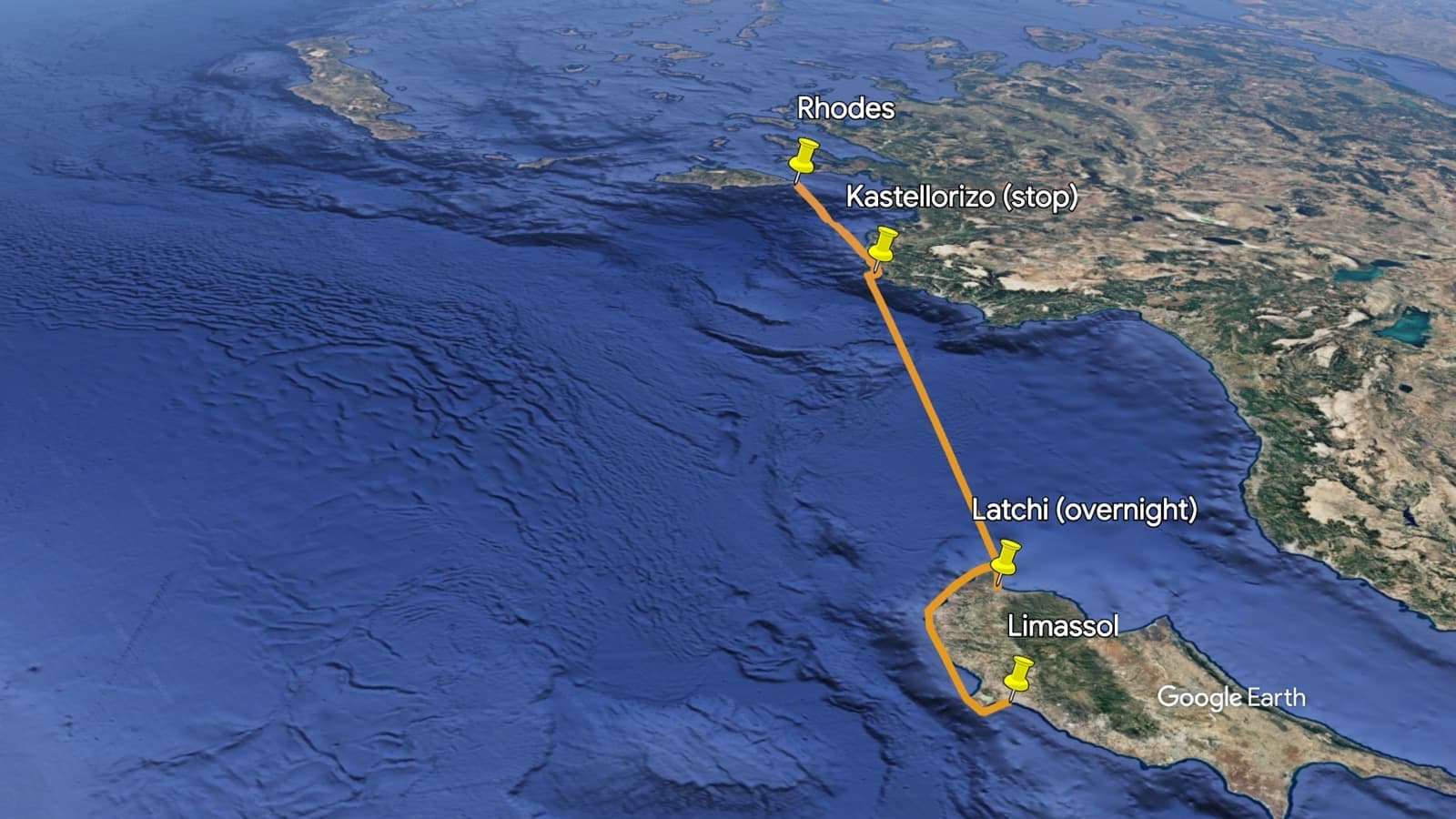
Limassol → Latchi → Kastellorizo → Rhodes
Overnight in Latchi
Open-sea crossing in half-metre waves, eased back from a 30 kn cruise
Touched 40 kn; last 20 nm on one engine
Every RIB 960 is certified CE Category B, the offshore rating. We wanted to show what that means at sea, so on 26 August we took our own boat, VELOCITY 1, from Cyprus to Rhodes.
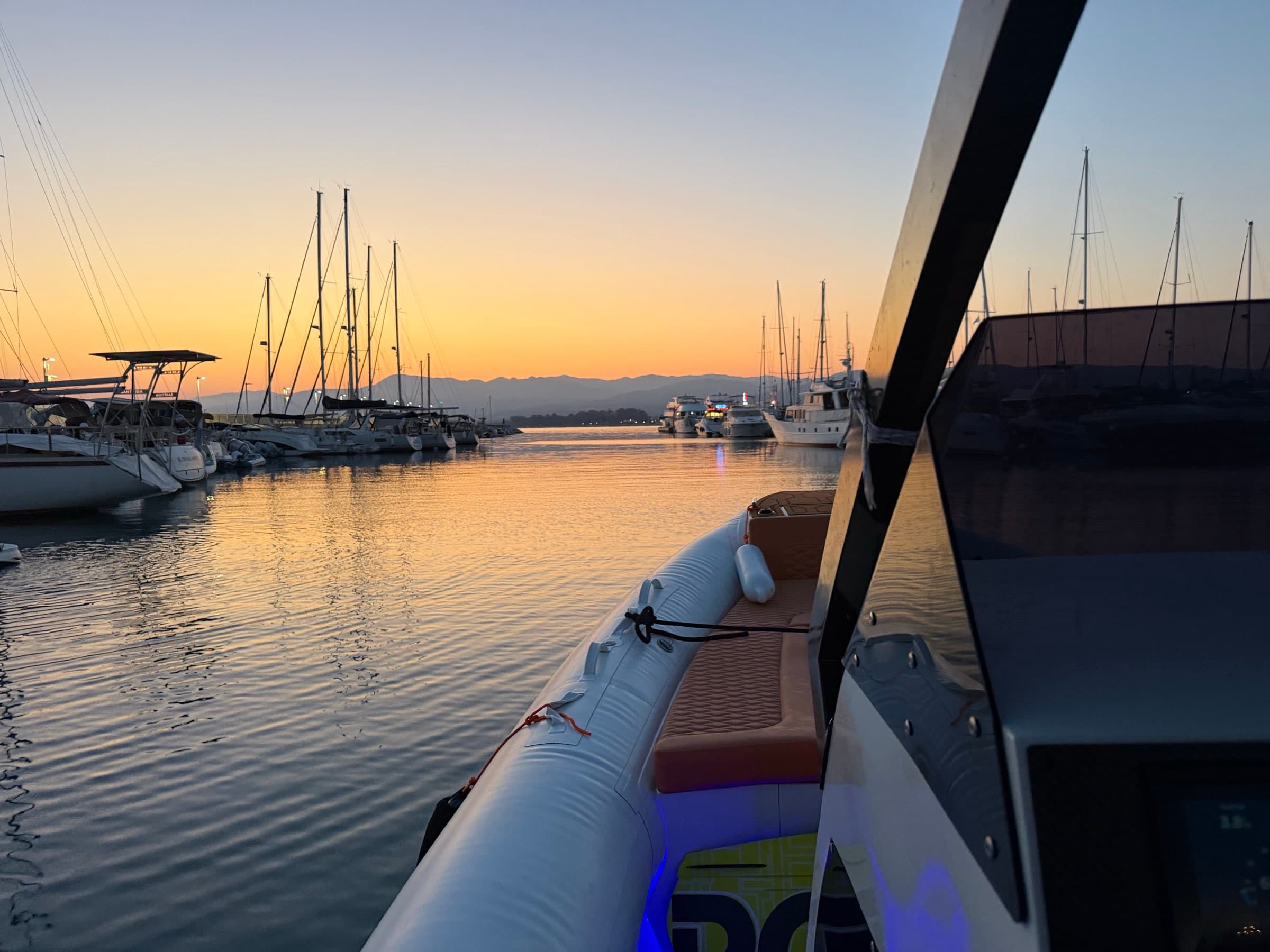
We left Limassol at 07:50 and ran 71 nm west: around the Akrotiri peninsula, past Paphos and up the Akamas coast to Latchi on Chrysochou Bay, arriving around 10:30. We spent the rest of the day and the night in Latchi, ready for an early start.
The whole trip was built around this leg: 154 nm of open sea from Cyprus to Greece. We left Latchi at 06:00, with first light just coming up over the mountains.
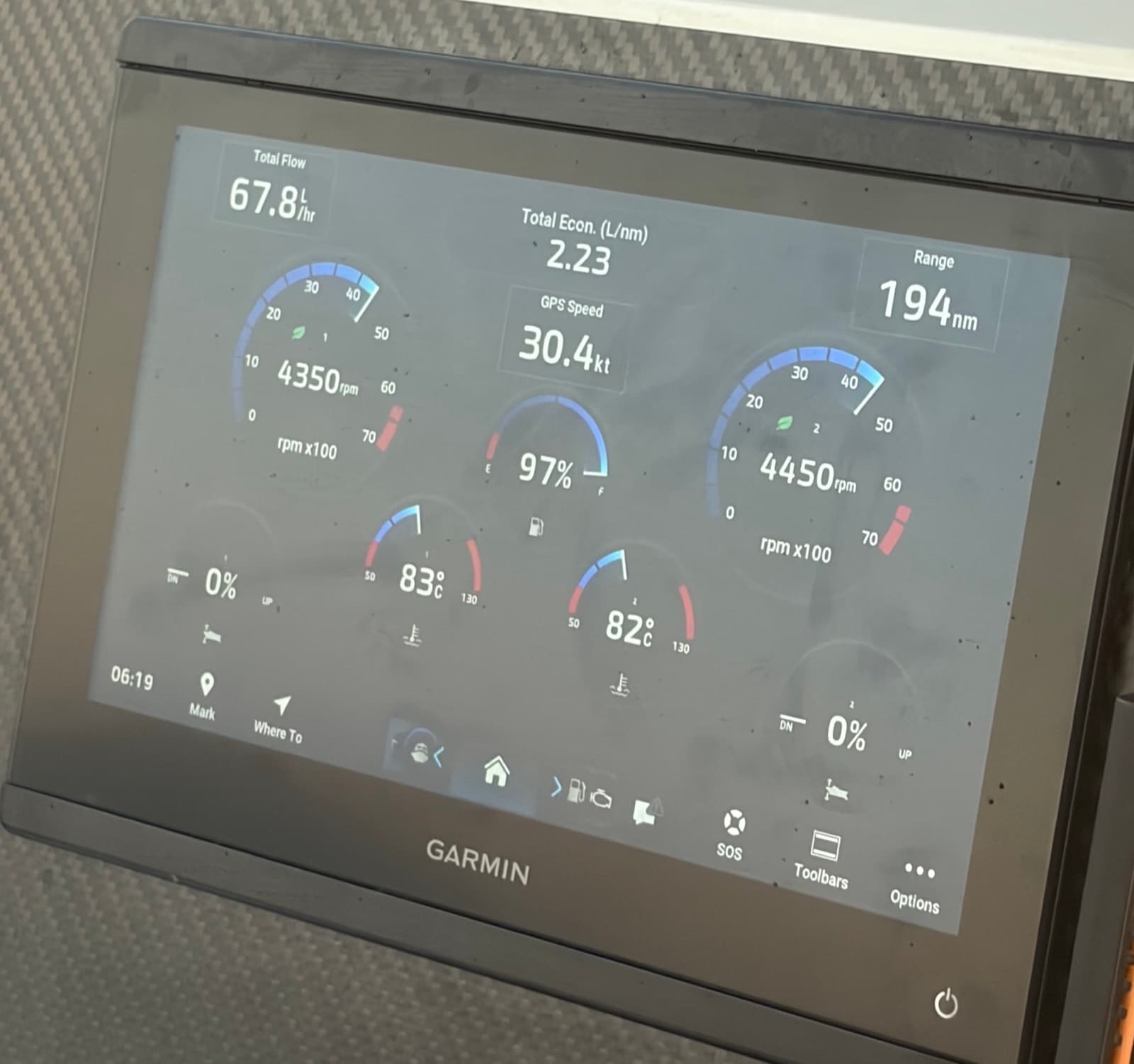
Nineteen minutes later, the helm display showed 30.4 knots, with both Honda BF250s turning around 4,400 rpm. We were burning 2.23 litres per nautical mile, and the range reading was 194 nm, more than enough for the whole crossing.
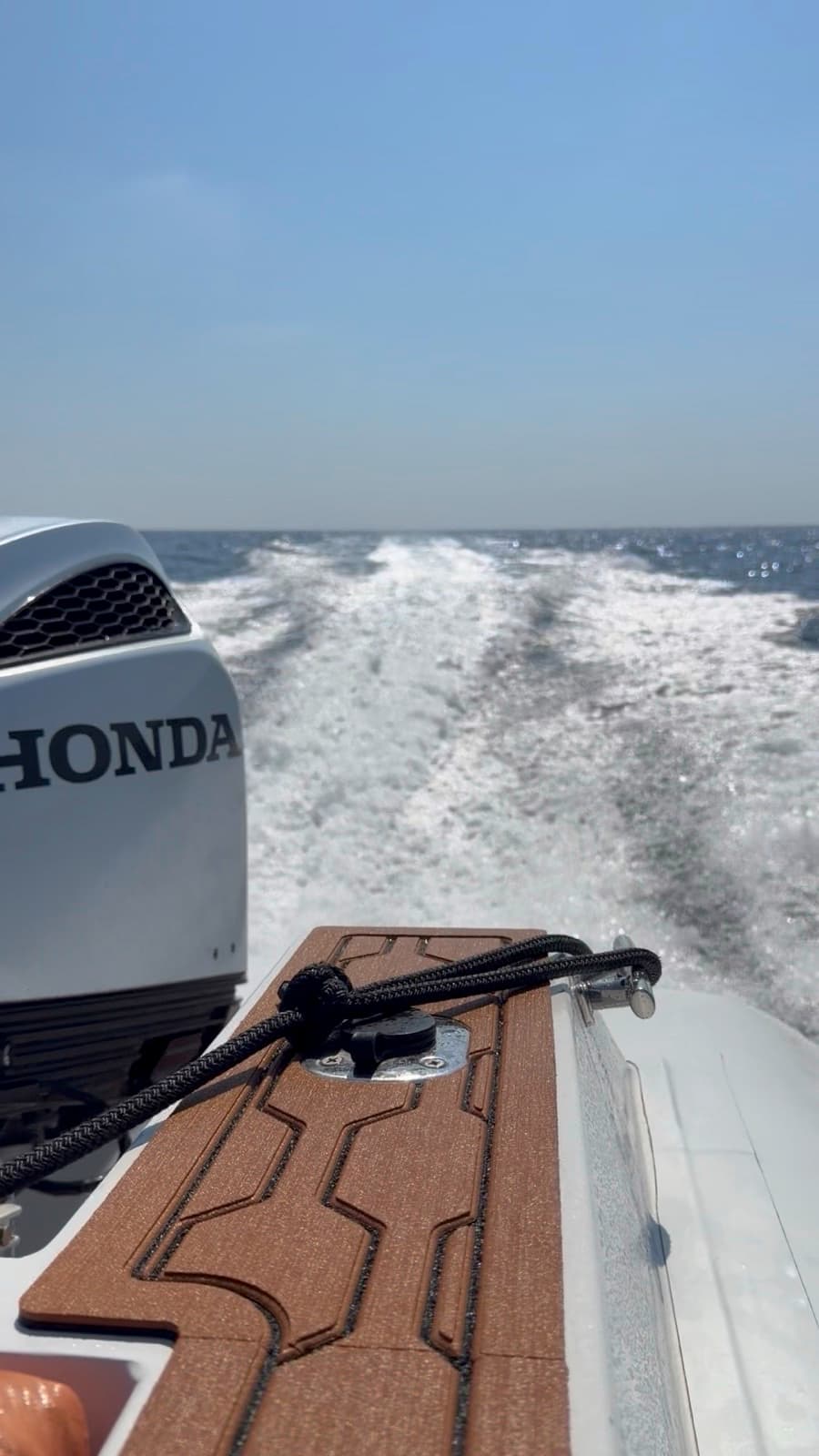
Out on open water, we met waves of around half a metre. That's not a rough sea by any means, but it was enough that we eased back to a comfortable pace, and we averaged just over 25 knots for the crossing. The way the boat ran through it was a pleasure to watch, even when the occasional bigger wave came through. We already knew we had a good hull, and six hours of open sea proved it. We finished this leg with more confidence in the boat than we started with.
At noon we were in Kastellorizo, a harbour lined with painted houses at the far eastern edge of Greece.
"We knew we had a good hull. This crossing was the proof."
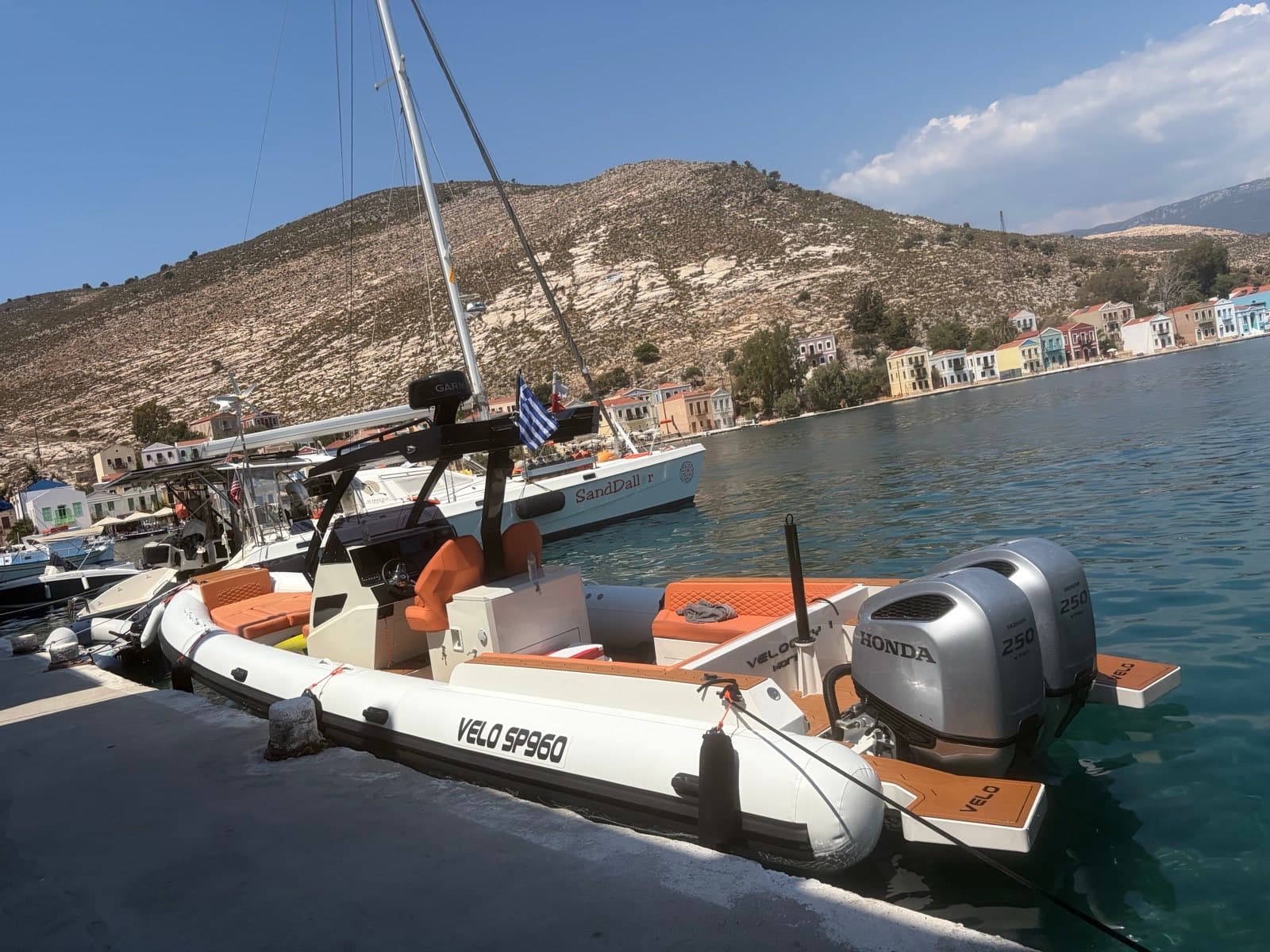
After three hours ashore, we left Kastellorizo at 15:00 for the final 69 nm to Rhodes. At our usual pace, that's a little over two hours. For the first hour and a half it went exactly to plan: we covered 49 nm, touching 40 knots at times, with Rhodes getting closer.
Then, 20 nm out, the port engine stopped pushing the boat. The engine itself was running fine; the problem was the propeller. We stopped to take a look and found a spun hub. The rubber bushing inside the propeller hub had let go, so the propeller was turning without gripping.
It made sense. For this trip we had fitted a set of lightly used stainless steel propellers, with under 20 hours on them. They had been stored outside, though, and our best guess is that the rubber had dried out and weakened.
We had the original aluminium propellers and the right tools on board, and we could have swapped them on the spot. We decided not to, because changing a propeller while drifting in open water means one dropped tool or part is gone for good. So we carried on with one engine, and 20 miles that should have taken 40 minutes took two and a half hours.
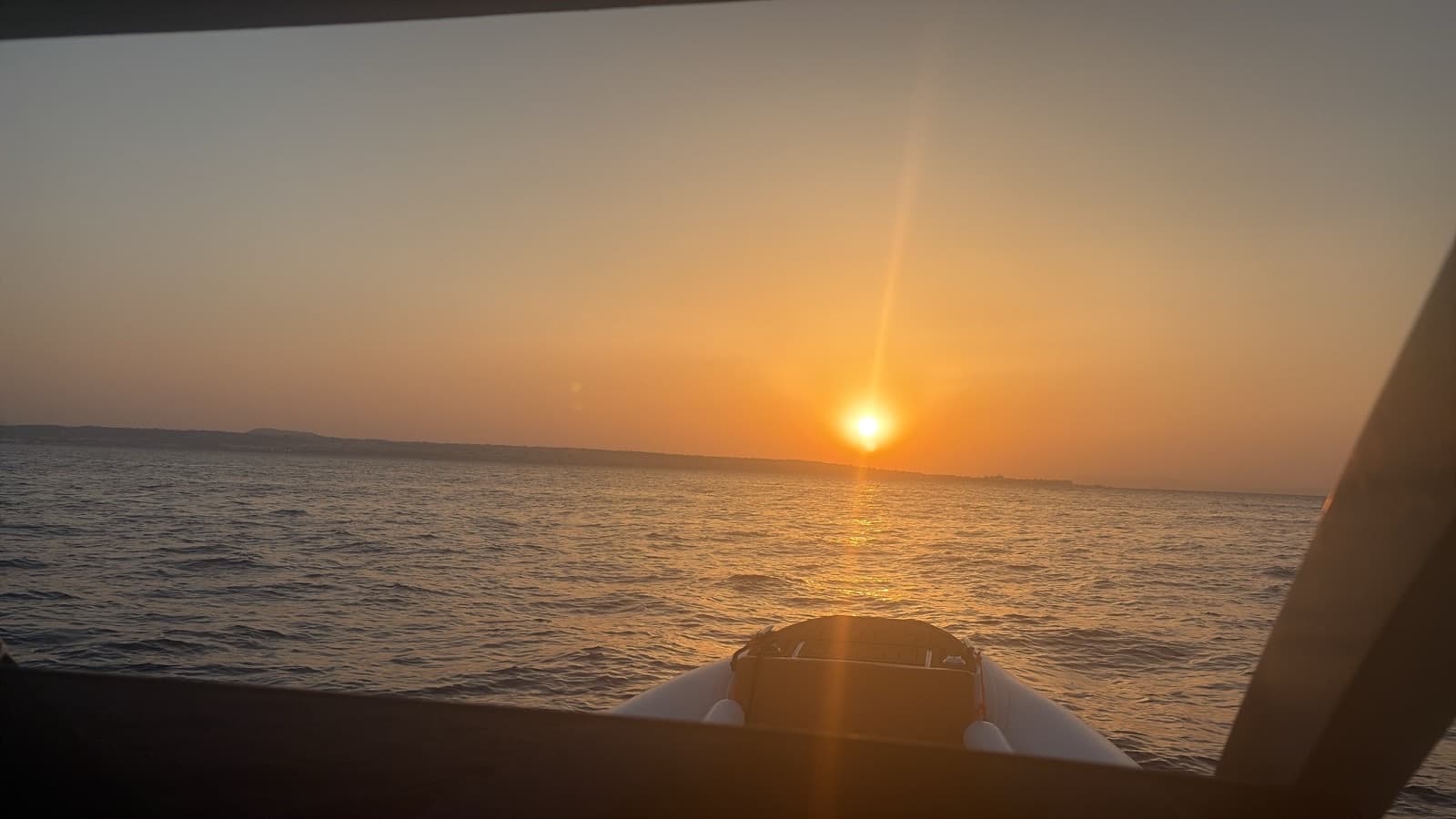
We reached Rhodes at 20:00, tired but satisfied. The next morning, we swapped back to the aluminium propellers ourselves, working from the swim platform, which puts the outboards within easy reach.
The trip covered 294 nautical miles in just under 14 hours underway, across two countries in two days, including the last 20 miles on one engine. That's the other thing a passage like this proves. With twin outboards, losing a propeller meant a late arrival, not a call for help. And for anyone keeping a boat in Cyprus, the Greek islands are a two-day passage away.